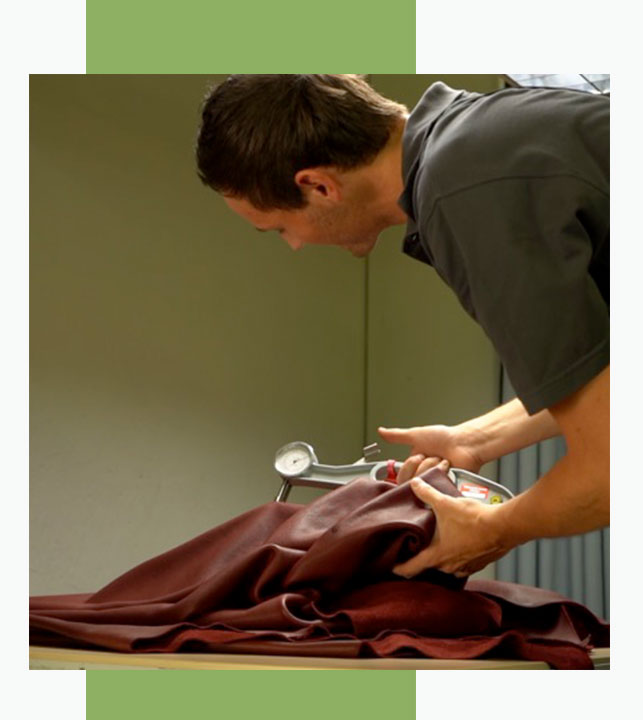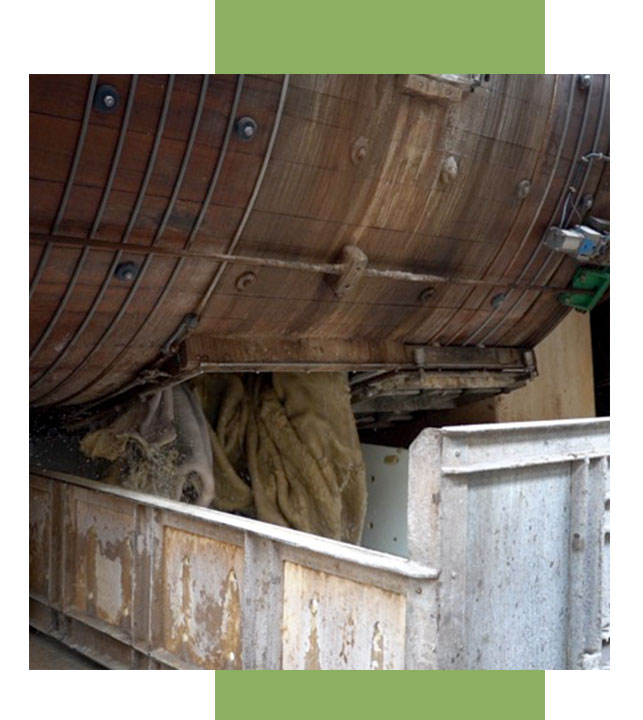
Preparation of the skin for tanning
Soaking
The raw goods are cleaned. Contaminates and preserving salts are removed.
Liming
The addition of chalk and sulfur compounds removes hair from the skin and any excess proteins or fats.
Fleshing and splitting
Removal of flesh and tissue residue using a sharp cutting roll.
Staining, pickling and tanning
Bating and pickling
Bating and pickling the skins (with enzymes, acids and salt) makes the tissue fibers receptive.
Tanning
Probably the most important stage in leather production. During tanning, the structure is stabilized and conserved with the use of tanning materials - this turns the skin into leather.
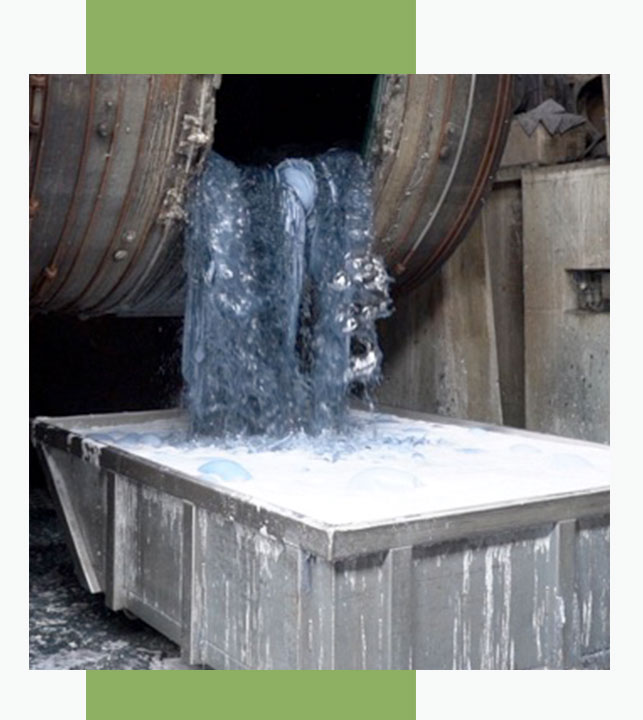
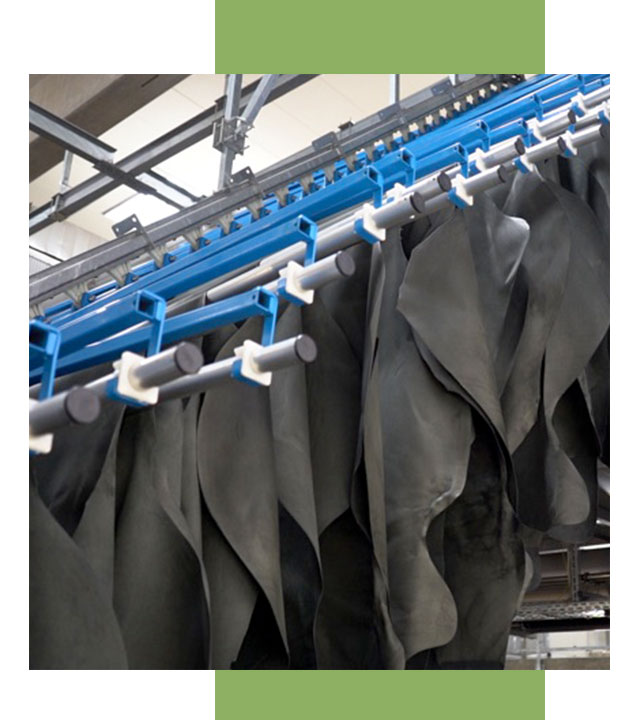
Dying and drying
Sammying (dewatering)
The wet leather is dewatered
Sorting
The leather is sorted according to the different quality criteria.
Folding
Leather is developed to an even thickness
Neutralizing, filling, dying and greasing
The acids from tanning are neutralized. Filling and dying is carried out depending on the type of leather, next the finished leather is given the required softness and elasticity through greasing.
Drying
Drying (vacuum, tensioning frame and/or hang drying)
Milling and studding
Softening of the leather fibers
Quality check